
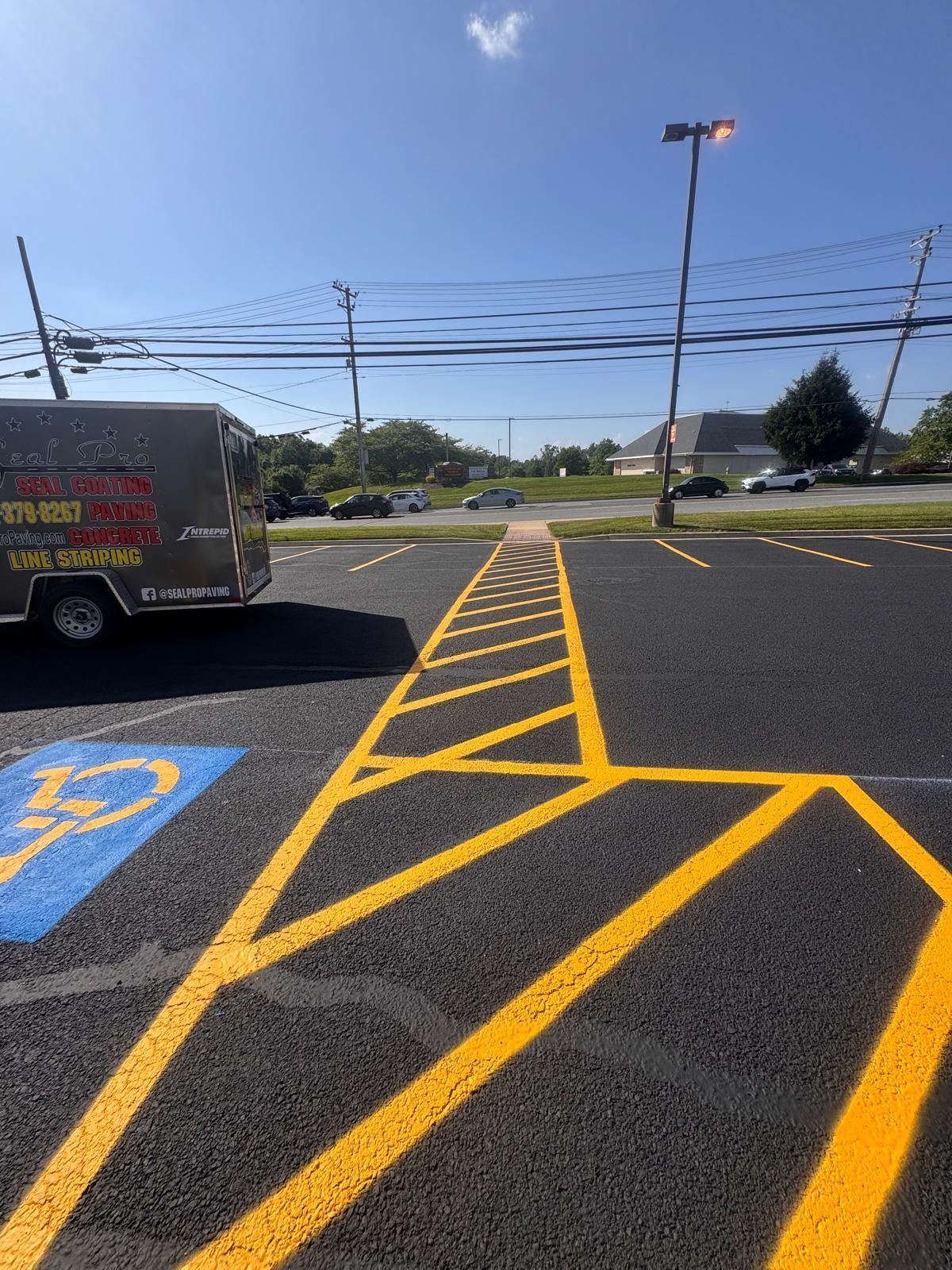
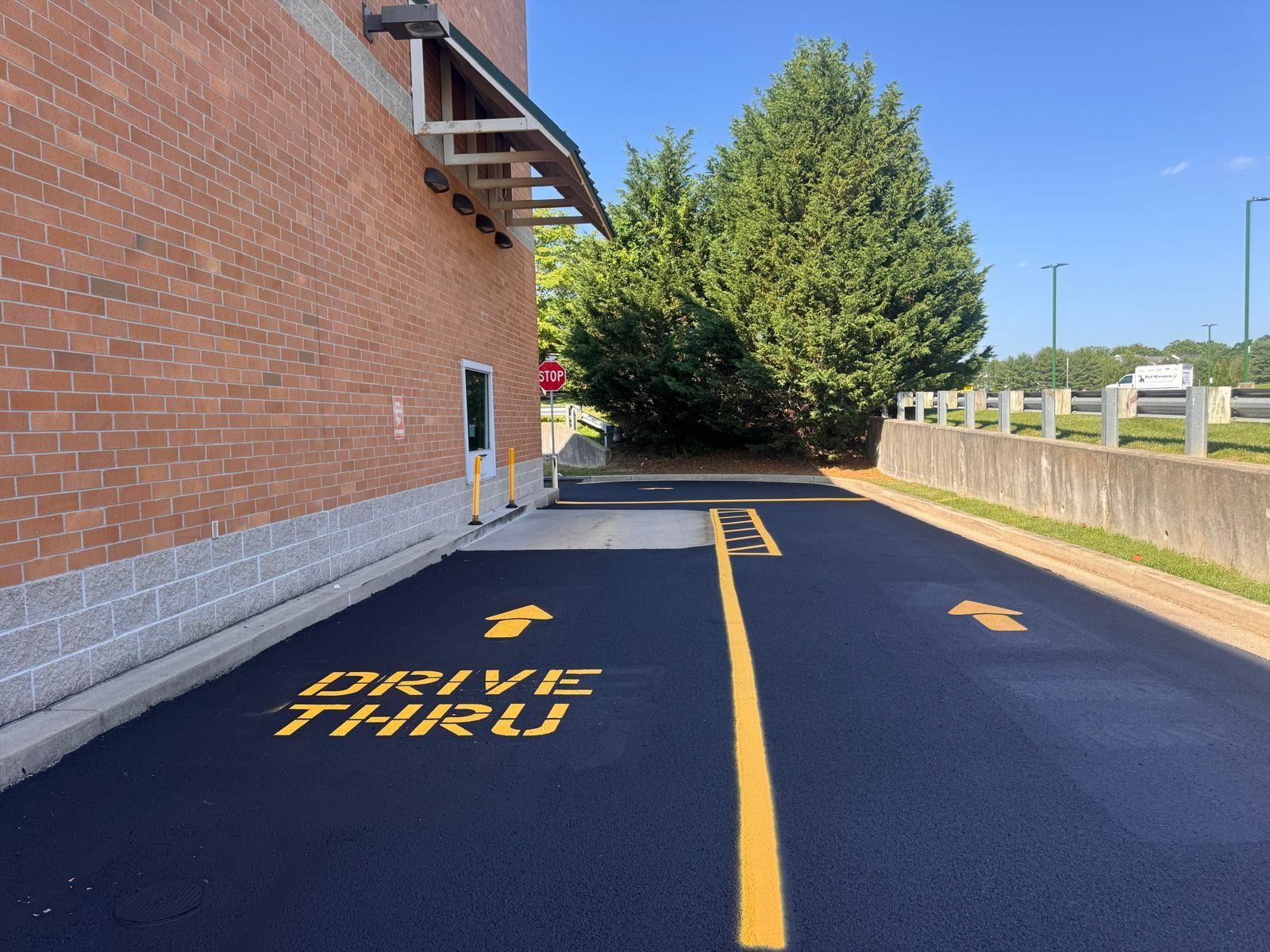
Penetrating sealers reduce freeze-thaw damage and salt scaling. Timing and surface prep are key for a clean, natural look. Penetrating sealers help resist de-icing salts and moisture. Surface must be clean and dry; avoid film-forming products if you want a natural finish. Repair spalls and cracks before sealing. Choose breathable, penetrating silane/siloxane blends. Reapply as recommended by product exposure.
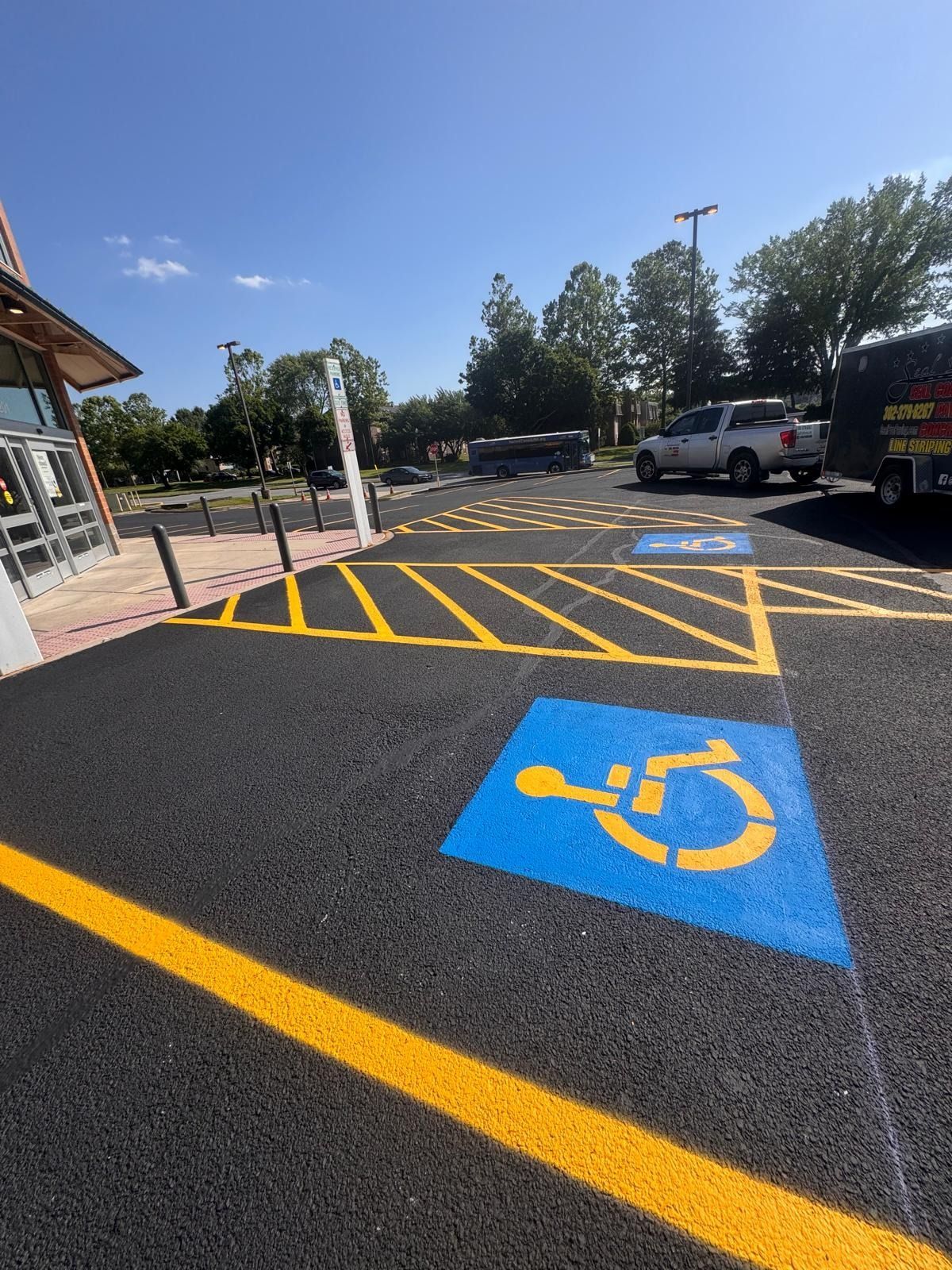
Routine crack-fill + annual inspection prevents water intrusion and base failures—reducing downtime and protecting your investment. Annual inspections catch cracks, raveling, and drainage issues early. Strategic crack-fill + selective patching prevents sub-base damage. Prioritize heavy-turn zones and entries/exits. Thermoplastic & epoxy options for high-wear markings. Night/Weekend scheduling available to reduce downtime.
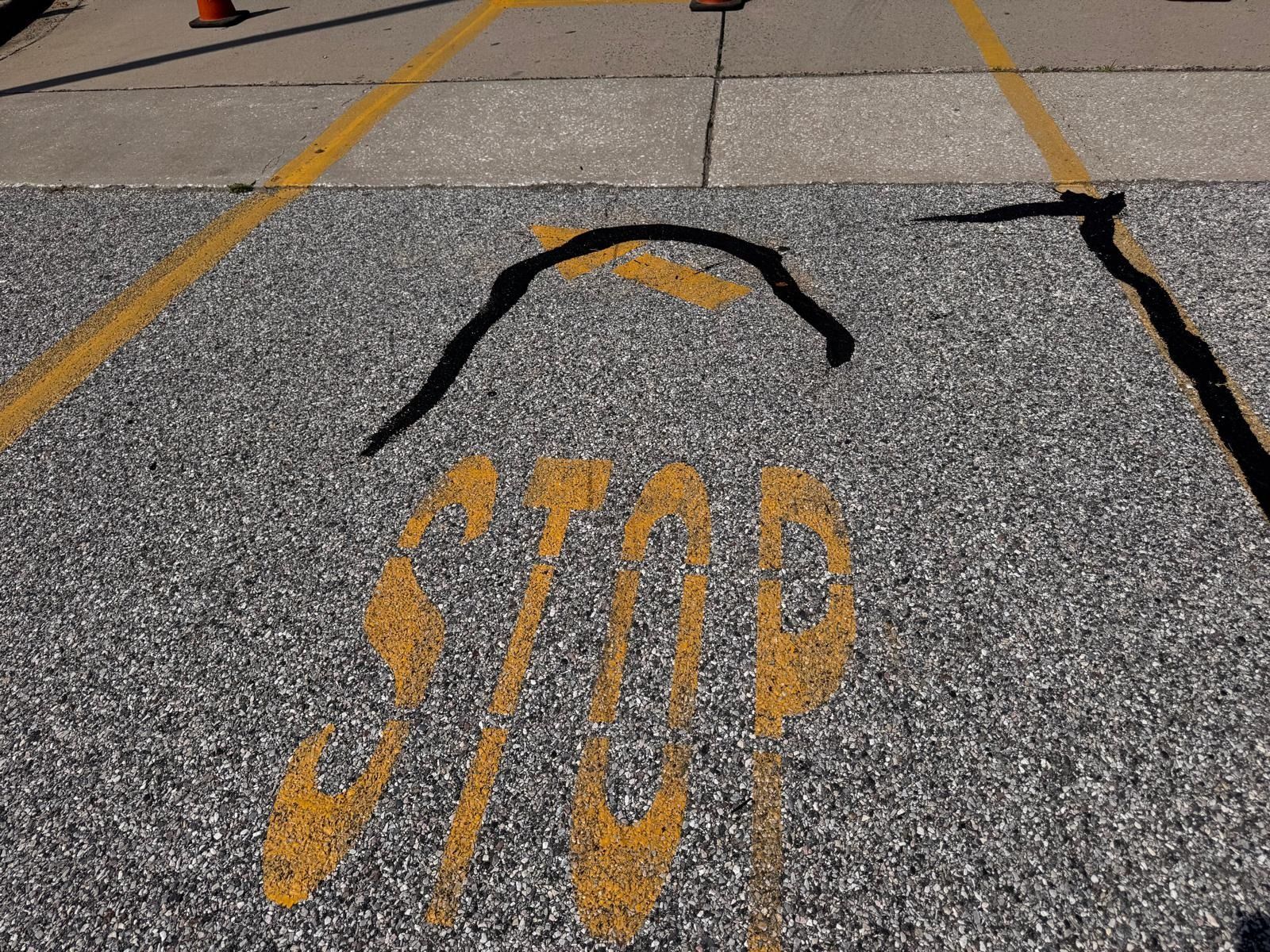
Crisp, high-contrast markings improve safety and traffic flow. We use durable paints and lay-out methods for ADA, fire lanes, and high-turnover lots. Good layout maximizes capacity and ADA compliance. We use high-visibility paints and prep for clean adhesion after sealcoating. ADA stalls, access aisles, and signage placement. Fire lanes, stop bars, and arrows for traffic clarity. Periodic restriping keeps contrast high and lots safer.

